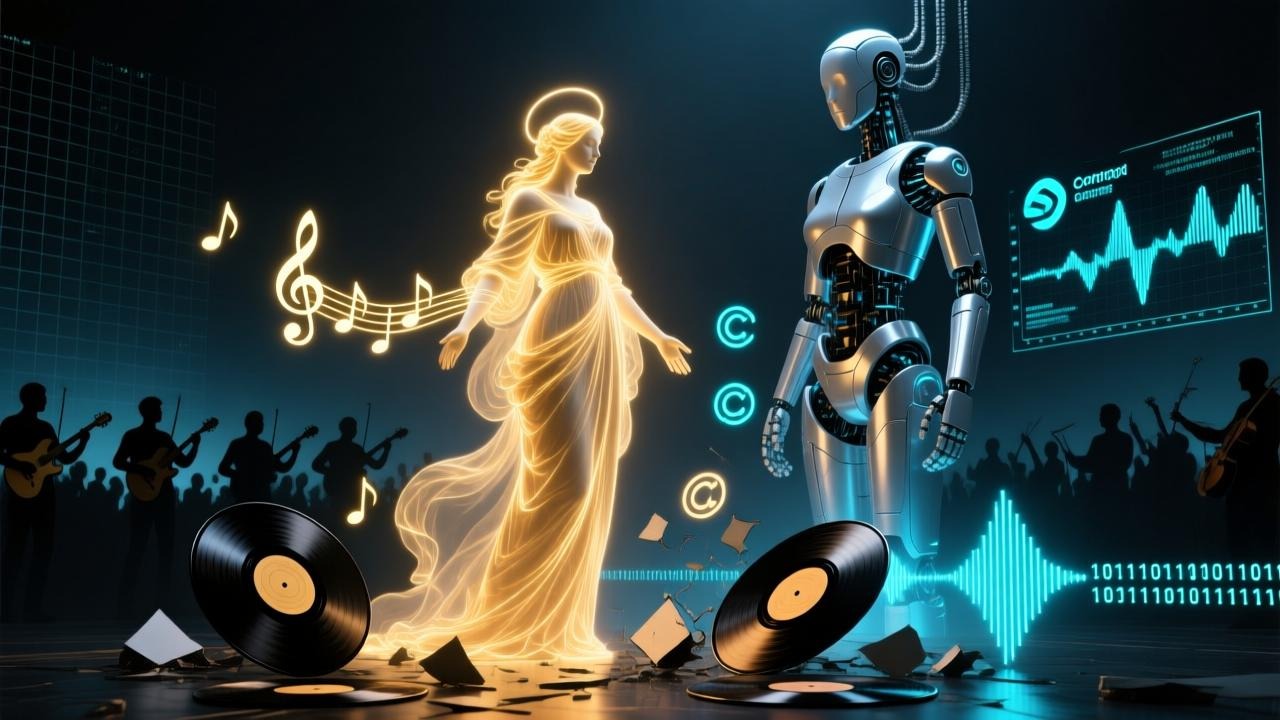
AI becomes pro-artist’ according to Warner’s licensing agreement with Suno, but can it compete with the divine feminine
30/12/2025
The licensing agreement between Warner Music Group and Suno reflects a significant shift in how AI-generated music will be created and distributed. Earlier, Suno had grown rapidly through investments and paid subscriptions while its AI systems were trained and operated without proper licenses from music rights holders. Following this agreement, Suno is now required to operate under a controlled and licensed framework. The key condition imposed is that AI-generated music can only be downloaded through paid subscription plans, ensuring that artists and rights holders receive compensation. Free users will still be able to create music, but their outputs will remain confined within Suno’s platform and cannot be freely downloaded or commercially exploited. In essence, the agreement seeks to balance technological innovation with artist protection by allowing AI creativity to continue, but only under conditions that recognize and remunerate human creators.
The agreement between Warner Music Group and Suno raises serious concerns about how music creativity and artists’ control may change in the future. Under this model, fans are encouraged to engage more deeply through AI tools that can use an artist’s name, image, voice, style, and even personal traits, but these features are mainly designed to generate revenue and collect user behavior data. This risks turning an artist’s identity into a commercial product rather than respecting their creative agency. The concern grows further because Suno has acquired Songkick, which gives it access to detailed fan and audience data. When combined with AI algorithms, this data can be used to priorities certain music over others, potentially sidelining independent voices and reducing diversity in music. Importantly, these changes are happening without proper consultation with artists or public discussion, and existing laws—especially those protecting personality and identity rights—are not strong enough to address these risks. As a result, the rules of creativity are being reshaped by private corporate deals instead of transparent legislation or democratic debate.
Because there are no clear laws yet to deal with how AI platforms use music, voices, and likenesses, music collecting societies have stepped in to fill this gap. Organizations such as GEMA and Koda have filed lawsuits against Suno, accusing it of using protected musical works without permission and making them available to the public illegally. These legal actions are not only about copyright infringement, but also about highlighting the economic harm suffered by artists. Some countries, including Australia, Denmark, and Netherlands, offer useful examples where privacy and personality rights (such as protection of voice or likeness) may address these problems better than copyright law alone. Through these lawsuits, collecting societies are trying to force accountability that private licensing deals often avoid. Overall, these developments show that future law reforms must go beyond traditional copyright and consider the cultural and social value of creativity, so that algorithm-driven market forces do not end up controlling how art and artists are treated.
The main takeaway is that creativity should not be controlled only by algorithms or corporate licensing deals. Agreements like the one between Warner Music Group and Suno may help generate revenue, but they do not address deeper cultural and human concerns. They also overlook the voices of everyday creators and fans who are affected by how AI reshapes music and meaning. When Rosalía says that her work Lux is fully human—despite involving advanced neural-network translation—it shows that the line between “AI” and “human” creativity is no longer clear-cut. True creativity goes beyond technical reproduction; it carries emotion, identity, and what is often described as a deeply human or “divine feminine” expression. This suggests that if laws and policies cannot adequately protect this human creative spark, then society itself—through shared cultural values and norms—may need to push back against a future where technology alone defines what art means.
Mahima